Junk removal requests · Mon–Sat 7am–7pm
Appliance Removal in Atlanta, GA
Dead fridge in the garage, a washer that walks across the floor, a stove from the kitchen remodel. An independent local contractor hauls it out and sends the metal to scrap; simple water and electric disconnects are often handled on site.
Atlanta Junk Haulers is not a hauling company: we pass each request to an independent local junk removal contractor and confirm who will contact you.
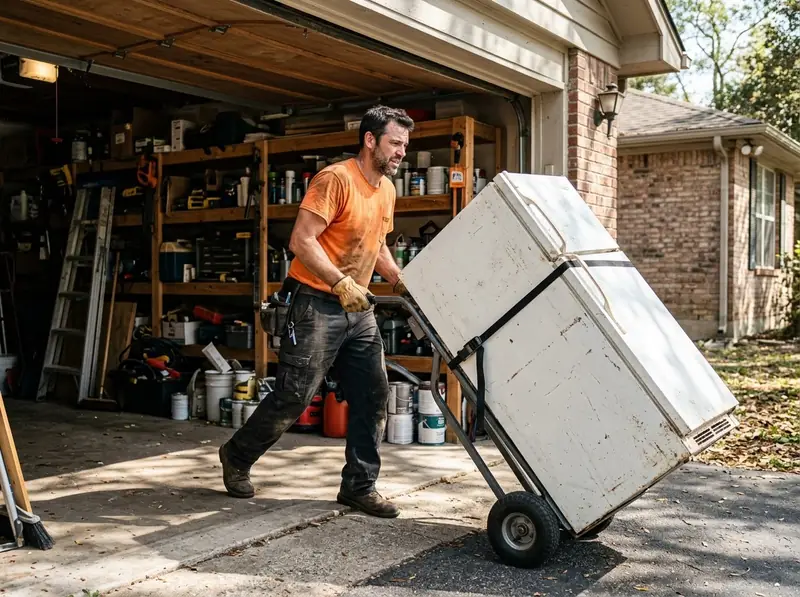
Appliance Removal
Why old appliances need more than a trash pickup
A full-size refrigerator weighs a few hundred pounds and doesn't bend around corners. Washers hide water in the drum and hoses. Chest freezers in basements were often carried down before the stairs were finished. That's why appliance removal usually takes two people, a hand truck and ratchet straps.
Appliances that hold refrigerant, like refrigerators, freezers, window air conditioners and dehumidifiers, also come with federal rules. The refrigerant has to be recovered by a certified technician before the unit is scrapped. Reputable haulers bring those units to recyclers who handle that step, which is one reason they can't simply go out with the trash.
Curbside programs around metro Atlanta treat appliances as special pickups. DeKalb County schedules large appliances as a bulky item, assessed and paid for before collection. Marietta arranges special pickups by phone, with a fee added to the sanitation bill. East Point books bulk appointments that include old appliances, with two free amnesty pickups a year for single-family homes. A haul-away skips the curb entirely.
How it works
How appliance removal works
Tell us the appliances
Type, size and where each one sits in the house.
Prep the unit
Empty it, unplug it, shut off the water. Gas lines get capped by a pro.
Agree the price
Ask the contractor to confirm the price before anything moves.
Out and recycled
Units leave on a dolly; ask where the metal and refrigerant go.
What the job covers
Appliances that go
Refrigerators and freezers
Full-size, side-by-side, mini fridges, wine coolers and chest freezers. Empty them first; spoiled food can't ride along.
Washers and dryers
Front-load, top-load and stacked units. Shut the water off; most contractors can disconnect the hoses.
Ranges and ovens
Electric ranges, wall ovens and cooktops. Gas ranges need the line shut off and capped by a plumber or gas technician first.
Dishwashers
Usually pulled during a kitchen remodel, often alongside old cabinets and countertop debris.
Water heaters
Tank units from the garage, basement or attic, once drained and disconnected.
Small and cooling units
Window AC units, dehumidifiers, microwaves, trash compactors and old space heaters.
Pricing
How is appliance removal priced?
One appliance is priced as a single item. Several appliances, or appliances plus other junk, move up the truck-space scale by volume like any other load.
| What affects the price | Why |
|---|---|
| Refrigerant | Fridges, freezers and AC units may carry a handling charge for refrigerant recovery. |
| Location in the house | A washer in a ground-floor laundry room is quicker than a freezer in a basement or a water heater in the attic. |
| Disconnection | Water and electric disconnects are usually simple; gas lines need a plumber or gas technician first. |
| Number of units | A full kitchen swap-out usually costs less per appliance than separate visits for each one. |
Tell us the type, size and location of each appliance, and the contractor has what they need to quote.
Before you book
Where do old appliances end up?
Almost every appliance is mostly steel, so the main destination is a scrap metal recycler. Units with refrigerant go through recovery first. Working appliances that are fairly new and clean may be donated instead; some Habitat ReStores take working appliances that meet their age and condition rules.
Before pickup, empty the unit, tape the doors shut if it has to wait outside and clear a path to the door. If the appliance still runs on gas, have a plumber or gas technician shut off and cap the line first. Junk haulers generally don't touch gas connections.
Water heaters deserve their own note. A typical tank holds 40 to 50 gallons, and sediment at the bottom makes it heavier than it looks, so drain it a day ahead or ask the contractor whether draining is part of the job. Attic units in older Atlanta homes may need two people on the ladder.
Official sources
- EPA Section 608 refrigerant rules: federal rules on refrigerant recovery before an appliance is scrapped
- DeKalb County bulky item collection: how DeKalb County assesses and charges for appliances set at the curb
- Habitat for Humanity ReStore locator: some ReStores take working appliances
FAQ
Appliance Removal questions
Will the store haul away my old appliance?
Many retailers offer haul-away with delivery, sometimes for a fee, and usually only for the same kind of appliance they deliver. For a fridge in the garage that isn't being replaced, or several units at once, a separate pickup is simpler.
Do working appliances get taken too?
Usually. Working units that are clean and fairly recent may go to donation or resale. Mention that it works in your request.
Can the contractor disconnect my washer and dryer?
Usually, yes. Water hoses and electric dryers are simple. Gas dryers need the gas line shut off and capped first by a plumber or gas technician.
Is anything too heavy?
Rarely for household appliances. Very heavy units, like commercial refrigeration or a chest freezer full of ice, need more hands, so mention them and the contractor can plan for it.
Does the refrigerant rule apply to a mini fridge?
Yes. Mini fridges, wine coolers and dehumidifiers hold refrigerant too, just less of it. Under EPA Section 608 rules, the refrigerant has to be recovered before the unit is scrapped, so they go to the same recyclers as a full-size fridge.
Service areas
Appliance Removal across metro Atlanta
Open your town for its neighborhoods, its trash and bulky-item rules and the jobs people there ask about.
Have Something That Needs to Go?
Phone or use the form. Your request goes to an independent local junk removal contractor, and we confirm who will contact you.
Atlanta Junk Haulers is not a hauling company: we pass each request to an independent local junk removal contractor and confirm who will contact you.