Junk removal requests · Mon–Sat 7am–7pm
Construction Debris Removal in Atlanta, GA
Drywall, old cabinets, flooring, framing scraps. Debris removal can clear a remodel or a build site in one visit, without a dumpster parked on your driveway for weeks.
Atlanta Junk Haulers is not a hauling company: we pass each request to an independent local junk removal contractor and confirm who will contact you.
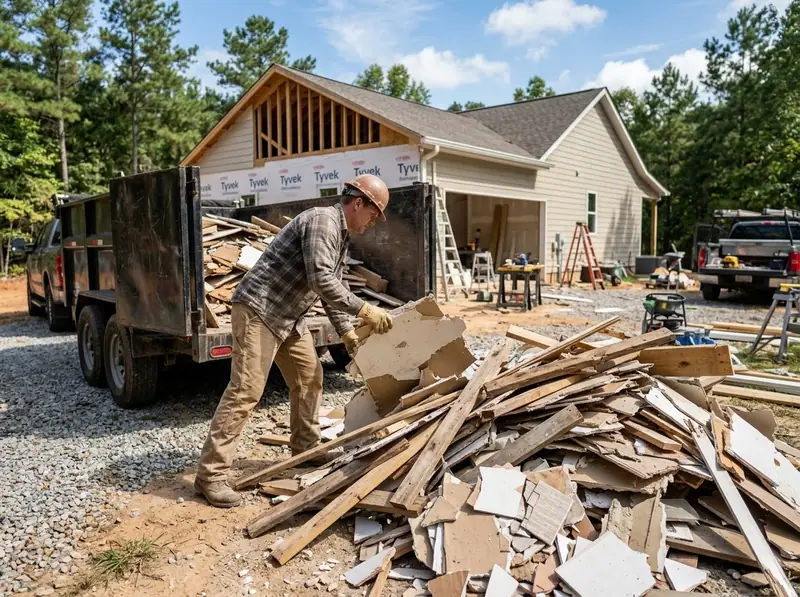
Construction Debris Removal
Debris hauling or a roll-off dumpster?
A roll-off dumpster makes sense for a gut renovation that runs for weeks. For a bathroom remodel, a deck tear-out or a weekend of DIY demo, hauling is often simpler. The contractor loads the pile in one visit, so there's no container blocking the driveway, no cracked concrete and nothing for passers-by to toss their own junk into overnight.
It also sidesteps rules. Many HOAs around metro Atlanta limit how long a dumpster can sit in a driveway, and a container on the street may need city approval. A haul-away visit is over in an hour or two.
Check what the curb will take before you plan around it. DeKalb County does not collect professional contractor waste or concrete at the curb, Marietta leaves building materials and demolition waste to the household or the contractor, and Roswell keeps construction debris out of its large-item pickup. Remodel debris almost always needs a hauler or a container.
How it works
How construction debris removal works
Describe the project
Type of remodel, materials and roughly how big the pile is. Photos are best.
Pile it or leave it
Stack debris in one spot if you can. If not, tell the contractor which rooms it sits in.
Agree the price
Ask for the price before loading, including any heavy-material charges.
Loaded and cleared
Debris goes out; ask whether metal and clean wood get separated and the area swept.
What the job covers
Debris that goes
Drywall and plaster
Torn-out sheetrock, lath and plaster from older homes, corner bead and dried joint compound buckets.
Wood and framing
Studs, scrap lumber, old decking, trim, doors and fence boards. Nails left in are fine.
Cabinets and counters
Kitchen and bath cabinets, vanities and laminate counters. Stone countertops are heavy, so mention them.
Flooring
Carpet and pad, vinyl, laminate, hardwood and tile. Tile and stone are priced by weight.
Fixtures
Toilets, sinks, tubs, shower doors, light fixtures and ceiling fans.
Roofing and siding
Shingles, siding and gutters in smaller amounts. A full roof tear-off usually calls for a roofing dumpster.
Pricing
How is construction debris removal priced?
Debris is priced by volume and weight. Light debris such as drywall, wood and cabinets follows the truck-space scale. Heavy materials are priced by weight, because landfills charge by the ton.
| What affects the price | Why |
|---|---|
| Material mix | Wood and drywall are light for their size; tile, concrete and plaster are not. |
| Volume | How much of the truck the pile fills. |
| Where the debris sits | A neat pile by the driveway loads faster than debris spread through a house or up on a second floor. |
| Recurring pickups | Scheduled pickups at each phase of a remodel can be planned and priced together. |
Photos of the pile, plus a note on any tile, stone or plaster, get you the most accurate estimate.
Before you book
What can't go, and what costs more
Concrete, brick, dirt and rock are accepted in limited amounts but priced by weight, since a truck reaches its legal weight long before it's full. Old paint, solvents and adhesives stay behind, and so does anything that may contain asbestos.
Homes built before 1978 can have lead paint, and older homes can have asbestos in floor tile, popcorn ceilings and pipe wrap. That material needs testing and a specialist abatement company, not a junk hauler; in Georgia, asbestos removal work is regulated by the Environmental Protection Division. If you're unsure, test before the demo starts.
For remodelers, pickups at the end of each phase keep a job site clean between inspections. Mention it in the request and ask the contractor to plan the visits together.
If a builder or handyman is doing the work, read the contract first. Many include debris removal, and paying twice for the same pile is an easy mistake. Where the contract is silent, a pickup you book at the end usually covers what the trades left behind: offcuts, packaging, old fixtures and the pallet the tile came on.
Official sources
- EPA guidance on lead: lead paint in homes built before 1978 and safe renovation practices
- EPA guidance on asbestos: where asbestos hides in older homes and who can test for it
- Georgia Environmental Protection Division: state rules for construction and demolition waste
FAQ
Construction Debris Removal questions
Can debris go while the remodel is still underway?
Yes. Mid-project pickups are common, especially right after demo day and again at the end.
Is concrete accepted?
In limited amounts, priced by weight. Large slabs or a full patio tear-out may be better suited to a dumpster rated for heavy material.
Can debris my builder left behind go?
Yes. Homeowners often book a cleanup after a builder leaves leftovers, and remodelers book it directly too.
Do I need a permit for debris pickup?
Usually not for a haul-away visit on private property. Permits come into play when a dumpster sits on a public street.
Can old doors and cabinets be reused instead?
Sometimes. Habitat for Humanity ReStores take many building materials, such as doors, windows and cabinets in good shape, depending on the store. Check with your nearest ReStore before demo day so the pieces come out whole.
Service areas
Construction Debris Removal across metro Atlanta
Open your town for its neighborhoods, its trash and bulky-item rules and the jobs people there ask about.
Have Something That Needs to Go?
Phone or use the form. Your request goes to an independent local junk removal contractor, and we confirm who will contact you.
Atlanta Junk Haulers is not a hauling company: we pass each request to an independent local junk removal contractor and confirm who will contact you.